Travel Rule
What information must be disclosed when making a Bitcoin payment?
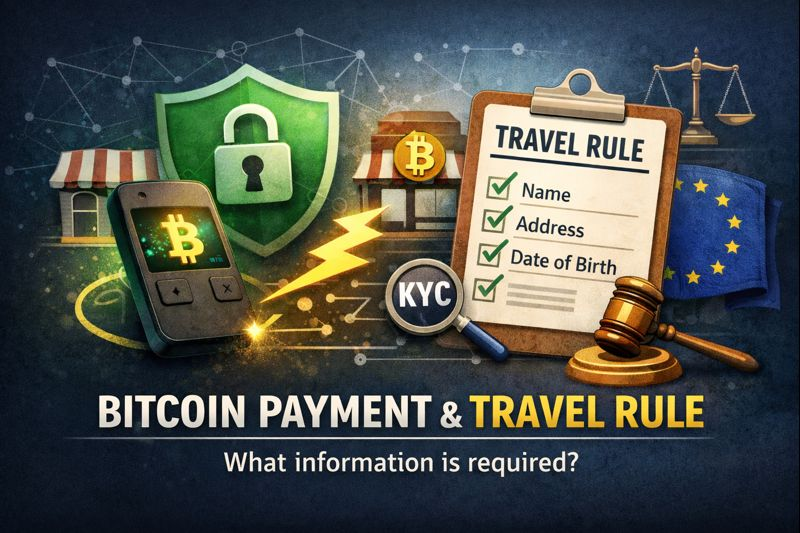
The Travel Rule raises questions for many Bitcoin users: Do I have to reveal my identity when paying with Bitcoin? What role does my choice of wallet play? This article explains the Travel Rule and shows how you can make payments in a privacy-friendly way.
The so-called Travel Rule is an EU regulation that governs what information must be collected and passed on for certain crypto transactions.
Many Bitcoin users are therefore asking themselves:
- Do I have to disclose my personal data when paying with Bitcoin?
- Is Bitcoin payment still private?
- What role does my wallet – and that of the retailer – play?
In this article, we explain in an understandable and practical way why the choice of a self-custody wallet is crucial – for payers and for merchants who want to accept Bitcoin.
Who is the Travel Rule really aimed at?
An important point right at the start:
👉 The travel rule is not aimed at Bitcoin users or traders, but at so-called Crypto Asset Service Providers (CASPs).
CASPs are regulated crypto service providers, for example:
- Bitcoin exchanges and brokers
- Custodial wallet provider
- Payment service providers that store Bitcoin for their customers
- Providers who exchange crypto for euros or vice versa
These companies are subject to EU regulation (MiCA, AML, Travel Rule) and are obliged to collect, check and, if necessary, pass on customer data.
👉 The EU Travel Rule obliges CASPs to do this:
- Capture originator and beneficiary data
- exchange them before or during the transfer
- and to keep it available for AML/CFT purposes
Possible data that CASPs need to collect:
- Full name
- Address
- Date of birth
- Wallet type & address
- Customer/transaction ID, if applicable
- Legal Entity Identifier (LEI) for companies, if applicable
Custody vs. self-custody – the crucial difference
Whether data must be passed on for a Bitcoin payment does not depend on Bitcoin itself, but on the form of custody.
Custody(third-party custody)
- Your Bitcoin is stored by a third party
- z. e.g. with an exchange or a payment provider
- The provider is obliged by CASP → regulatory requirements
- KYC, identity verification and data storage are mandatory
Self-custody
- You hold the private keys yourself
- Self-custody hardware wallet like: BitBox, Ledger, Trezor
- Self-Custody Lightning Wallet App like: Wallet of Satoshi, Breez, Zeus, Phoenix
- No third party stores your Bitcoin
- No CASP involved
- No disclosure of personal data required
👉 Self-custody means: control over Bitcoin and your data.
Example: From buying Bitcoin to your own wallet
Buy Bitcoin with Euro (Fiat)
Let’s say you buy your first Bitcoin from an exchange or broker:
- You go through a complete KYC process
- Your identity data is already available there
- As long as the Bitcoin is there, it is in custody
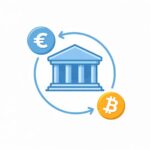
From exchange to hardware wallet
If you then transfer your Bitcoin to your own hardware wallet, the following happens:
- The exchange checks whether the destination address:
- belongs to another CASP or
- is a self-custody wallet
- This check is carried out, for example, by:
- Signature
- Satoshi test
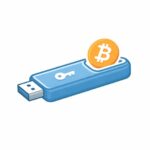
👉 If a self-custody wallet is confirmed, no personal data needs to be passed on.
From hardware wallet to the Lightning Wallet app
If you want to pay with Bitcoin, you usually use a Lightning Wallet on your smartphone. To do this, you transfer some of your Bitcoin from your self-custody hardware wallet to your self-custody Lightning Wallet app.
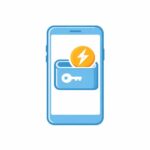
Self-custody Lightning Wallets on your smartphone are for example:
👉 If you transfer your Bitcoin from your own self-custody hardware wallet to your own self-custody Lightning wallet, no personal data will be passed on.
From Bitcoin purchase to Lightning payment
The typical process is:
Custodialwallet → Self-custody hardware wallet → Self-custody lightning wallet
Bitcoin Broker / Exchange
Third-party custody
Hardware Wallet
Self-custody
Lightning Wallet App
Self-custody
The following applies to all transfers between self-custody wallets:
- no custodian
- no payment service provider
- No data collection
- No travel rule
Bitcoin payments remain peer-to-peer.
What happens when I pay?
a) P2P payments (private)
Payments between friends or acquaintances who both use self-custody wallets:
- No registration
- No data collection
- Full privacy
Self-Custody
on
Self-Custody
If payment is made from one self-custody wallet to another self-custody wallet, no personal data needs to be passed on.
b) Paying at merchants – the critical point
The merchant’s wallet is crucial here.
In practice, merchants usually use one payment provider.
There are two fundamentally different models:
Bitcoin payment provider
As a merchant, you can choose between a custodial or a self-custodial payment service provider for Bitcoin payment processing.
Custodial payment provider
If a merchant uses a custodial payment provider, the Bitcoin received is credited to the payment service provider’s Bitcoin wallet and stored there. The data that the payment service provider must collect depends on whether the payment is made by:
- a self-custody wallet or
- from a CASP-regulated company such as a
- Bitcoin exchange, a
- Bitcoin broker or a
- Custodial Bitcoin wallet is coming.
Payment from a self-custody wallet to a custodial payment provider
The payer pays from their self-custody hardware wallet or lightning wallet. The payment is sent to a custodial payment provider, which credits the Bitcoin amount to the merchant’s Bitcoin wallet under its control.
Self-Custody Wallet
Custodial payment provider
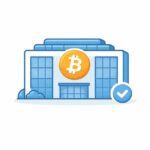
Custodial Bitcoin Wallet
When making a payment from a self-custody wallet, the custodial payment provider does not receive any user data from the wallet. However, depending on the interpretation of the national regulatory requirements, the payment provider must request user data. As a rule, this data is transmitted to the payment provider from the order data of the store system, but not from the wallet.
If this data is not collected by the store system, the payment provider may request it from the payer.
Payment from a custodial wallet to a custodial payment provider
The payer pays from a custodial wallet via a CASP, for example a Bitcoin exchange or a Bitcoin broker, to a custodial payment provider. The latter credits the Bitcoin amount to the Bitcoin wallet under its control.
Custodial Bitcoin Wallet
Bitcoin Exchange / Broker
Custodial payment provider
Custodial Bitcoin Wallet
In this case, one CASP transmits the following information directly to the other CASP:
- Name
- Address
- Date of birth
- There is currently no threshold amount in the EU: every transaction between CASPs must be accompanied.
- In some countries, a threshold value applies (e.g. € 1,000 in other jurisdictions).
SelfCustodial payment provider
The transfer takes place directly between the payer and merchant wallet, similar to a P2P payment.
Self-Custody Wallet
Self-Custody Wallet
A self-custody payment provider:
- does not store Bitcoin
- does not carry out transactions
- does not collect any payer data
Instead, it operates purely as a software provider:
- Creates payment invoices
- observes Blockchain or Lightning
- forwards payment status
👉 No travel rule, no KYC, no data collection.
Examples of self-custody payment providers:
- BTCPay Server
- Coinsnap
- Flash
- Zaprite
Why retailers should rely on self-custody
The self-custody model offers clear advantages for retailers:
- No purchase interruption due to registration processes
- Faster payments
- Better conversion
- No unnecessary storage of customer data
- Clear separation between payment and customer data
👉 For the delivery of an order, the data that the retailer needs anyway is sufficient.
Any additional payer data must remain protected.
Conclusion: self-custody is key
Regulation does not lead to the end of private Bitcoin payments, but to a clear separation of the models.
For payers:
- Self-custody of Bitcoin
- Use self-custody lightning wallets for payments
For dealers:
- Choose self-custody payment provider
- Enable open peer-to-peer payments
Self-custody is the trump card – for storage, payment and acceptance of Bitcoin.
Frequently asked questions about the Travel Rule & Bitcoin payments (FAQ)
❓ Do I have to enter my personal data with every Bitcoin payment?
No.
Personal data must only be collected and forwarded if the payment involves a regulated crypto service provider (CASP) that stores Bitcoin for its customers or carries out transfers.
No personal data is passed on for payments between two self-custody wallets.
❓ Does the Travel Rule also apply to private wallet-to-wallet payments?
No.
The Travel Rule is aimed exclusively at Crypto Asset Service Providers (CASPs) – not at private users.
Peer-to-peer payments between self-custody wallets (on-chain or lightning) are not subject to the travel rule.
❓ What is the difference between custody and self-custody?
-
Custody (third-party custody):
A provider stores your Bitcoin for you → KYC & Travel Rule relevant. -
Self-custody:
You hold the private keys yourself → no disclosure of data required.
The form of custody determines whether data must be collected.
❓ Why do some payment providers require registration or KYC when paying?
Some payment providers are themselves subject to custodial and regulatory obligations to identify payers and monitor payments.
In these cases, the payer becomes the customer of the payment provider and the Bitcoin payment takes place within a closed system.
❓ What data is forwarded with a CASP-to-CASP payment?
In a Bitcoin transaction between two CASPs, the data transmitted includes
To the payer (originator):
- Name
- Wallet or account ID
- Address or date of birth
To the beneficiary:
-
Name
-
Wallet or account ID
This data is transferred off-chain between the service providers, not via the blockchain.
❓ Is there a minimum amount from which the Travel Rule applies?
In the EU: no.
The travel rule applies regardless of the amount as soon as a transaction takes place between two CASPs.
❓ What happens when I send Bitcoin to or from a self-custody wallet?
In this case, there is no second CASP to which data could be forwarded.
However, the sending CASP can check whether it is actually a self-custody wallet (e.g. by means of a signature or a Satoshi test).
❓ Are lightning payments also affected by the Travel Rule?
Only if they run via a custodial provider.
-
Self-custody lightning wallets:
no data collection, no travel rule -
Custodial Lightning Wallets:
Possible KYC and data obligations
Here too, whoever holds the keys controls the data.
❓ Is Bitcoin “no longer anonymous” due to the travel rule?
Bitcoin was never anonymous, but pseudonymous.
The travel rule applies to service providers, not the Bitcoin protocol.
Those who store Bitcoin themselves and use peer-to-peer can continue to pay without sharing their data.
❓ What does this mean for merchants who want to accept Bitcoin?
Merchants should pay attention to how they accept Bitcoin:
- Custodial payment provider → KYC obligation for payers
- Self-custody payment providers → open peer-to-peer payments
The choice of payment provider is decisive:
- Privacy
- Cancellation of payment
- User experience
❓ Which payment providers support self-custody?
Examples of self-custody payment providers are:
- BTCPay Server
- Coinsnap
- Flash
- Zaprite
These providers do not store Bitcoin and do not carry out transfers.
🧩 In short
The Travel Rule regulates service providers – not Bitcoin itself.
Those who use self-custody retain control over Bitcoin and data.
Free initial consultation
If you would like to accept Bitcoin payments, arrange your free initial consultation with us now.